
Are the auto paint jobs in your shop turning out poorly? Learn causes and practical solutions for orange peel, contamination, color matching, and paint runs.
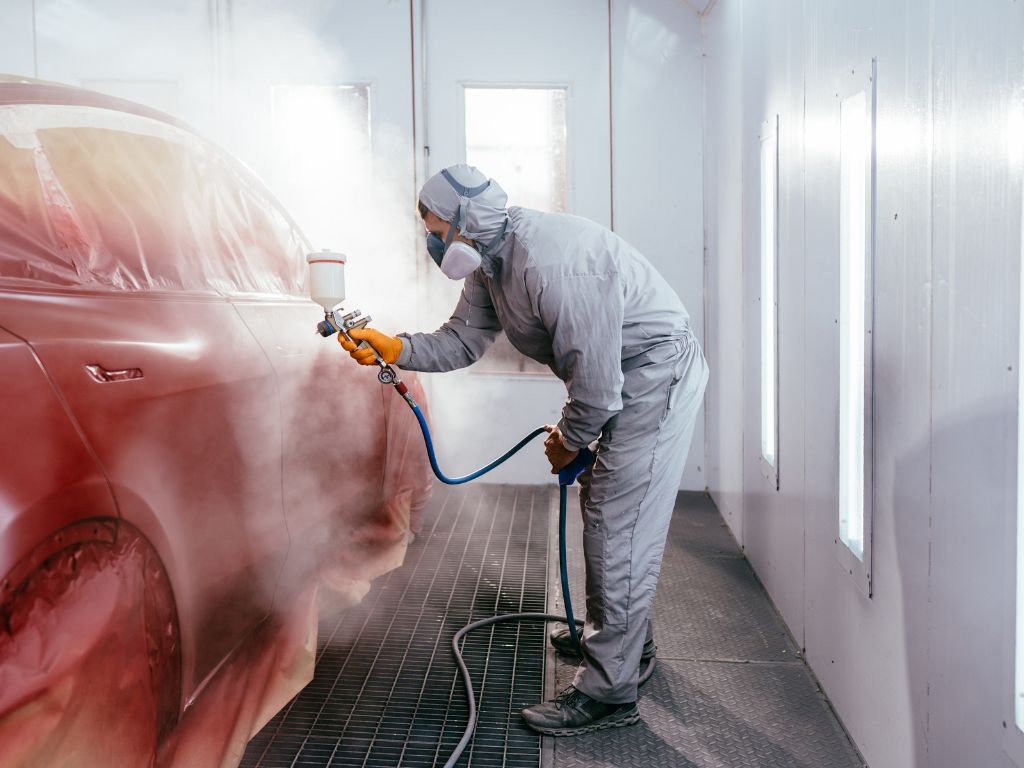
If you run a high-volume auto paint operation, dealing with problems can shut down your bays and cost you serious money. Let’s walk through the common paint shop issues and how to fix them so you can keep your lines moving and your quality consistent.
Orange Peel Texture
Orange peel happens when your paint droplets don’t flow together properly before curing. It results in a dimpled, uneven surface finish that ruins an otherwise perfect job.
The Fix
Check your spray gun settings first. You need the right air pressure, which is typically 28–35 PSI at the gun for base coats. Thin your paint according to manufacturer specs, and adjust your spray distance (the gun should be 6–8 inches from the panel).
Your shop temperature matters too. Paint flows better between 70–80°F, so dial in your booth climate control.
Inconsistent compressor pressure can also cause orange peel by creating uneven atomization, so monitor your pressure gauges throughout the day. Fluctuating readings could mean your compressor isn’t delivering steady air flow. Schedule maintenance to improve air compressor lifespan and prevent these atomization problems so they don’t ruin your finish quality.
Dirt and Debris Contamination
Nothing’s worse than finishing a job only to spot dust nibs, lint, or other garbage baked into the clear coat. Contamination wastes time, materials, and your team’s patience.
The Fix
Your booth filtration system needs regular attention. Change intake filters every month minimum, and more in dusty seasons. Inspect exhaust filters too. Lastly, clean your prep areas daily, and use tack cloths before any paint application.
Color Matching Problems
Your painter mixes what should be a perfect match, but the panels don’t blend. Metallics look off, and the customer will definitely notice.
The Fix
Make sure you calibrate your spectrophotometer monthly, and spray test panels under the same conditions you’ll use for the actual job—same gun, same pressure, same flash times.
Also, check your mixing ratios carefully. A digital scale beats eyeballing measurements every time. Finally, store your paint in climate-controlled areas because temperature swings can throw off viscosity and color accuracy.
Paint Runs and Sags
Heavy drips down vertical panels mean you’re applying too much material. Runs require sanding and refinishing, which kills your productivity numbers.
The Fix
Train your painters on proper overlap, which is 50 percent between passes for most applications. Keep consistent gun speed and distance. Multiple thin coats are better than one heavy coat, and it’s important to let each coat flash properly before adding the next layer. Most runs happen because someone rushed the process.
These auto paint shop issues are common, and fixing them comes down to attention to detail and consistent processes. Lock down your procedures, maintain your equipment, and train your team properly. You’ll spend less time fixing problems and more time delivering quality paint jobs that keep customers coming back.
Comments are closed.