
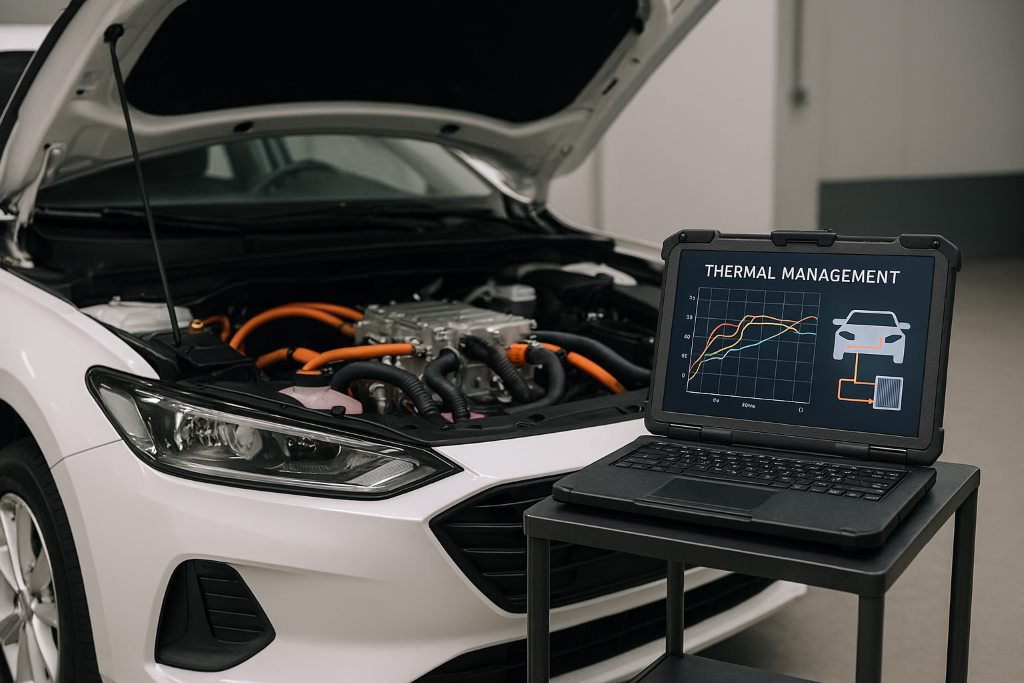
The Impact of Thermal Management on Electric Vehicle Performance

Thermal management systems can be likened to the glue that holds operations together, ensuring systems run smoothly under optimal conditions. IDTechEx’s portfolio of Thermal Management Research Reports and Subscriptions showcases the importance of method and material developments for thermal management across multiple sectors, including two of the largest industries: battery energy storage systems and electric vehicles.
Battery energy storage systems (BESS) have raised concerns about thermal runaway in Li-ion batteries. The large-scale expansion of projects and the use of BESS for grid-scale, commercial, industrial, and residential applications underscore the need for thermal management systems to ensure safety remains a top priority.
Thermal incidents, as described by IDTechEx, can release toxic chemicals and pose fire and explosion risks. These could have detrimental impacts on health and the environment, and may result in asset loss and increased insurance costs.
BESS thermal management can be categorised into active and passive approaches, with passive approaches including deflagration venting and material choices, such as cell spacers, thermal interface materials, fire protection materials, and phase change materials. Active thermal management systems include various cooling methods, sensors for gases, heat, and smoke, fire suppressants such as aerosols and water sprinklers, and ventilation.
IDTechEx’s report, “Thermal Management, Fire and Explosion Protection for BESS 2026-2036: Materials, Technologies and Players”, goes into more detail on established and emerging methods and explores global regulations surrounding BESS safety. With expected growth, IDTechEx projects that the BESS thermal management and fire protection materials and systems market will exceed US$25 billion by 2036.
Advancing Electric Vehicle Thermal Management
With the evolution of battery packs and drivetrains for electric vehicles comes a need for thermal management approaches beyond the initial trends of active cooling, which have now become standard across the EV industry. The development of cell-to-pack designs, directly oil-cooled motors, and silicon carbide power electronics is a few trends that will affect the approach to thermal management going forward, according to IDTechEx.
Creating materials that serve multiple purposes, including fire protection, compression, and thermal insulation, is one approach to thermal management for material suppliers, which also helps to meet the energy density requirements of EV battery packs.
Another emerging trend outlined by IDTechEx is immersion cooling, which could enable faster charging and improved battery safety through enhanced thermal performance. This approach would consider a range of potential fluids, benchmarked against suppliers in the report “Thermal Management for Electric Vehicles 2026-2036: Materials, Markets, and Technologies”.
Thermal management is required across all components of a vehicle’s powertrain, including the motor, where the magnets require an optimal operating temperature to ensure efficient operation. One recent trend has been the elimination of the cooling jacket and the use of direct oil cooling, which would also allow the motor size to be minimised.
The two methods can, however, be used in conjunction to enhance thermal management, although there was a clear increase in the use of oil as an electric motor thermal management strategy between 2015 and 2024, and a concurrent reduction in the use of water-glycol.
Comments are closed.