
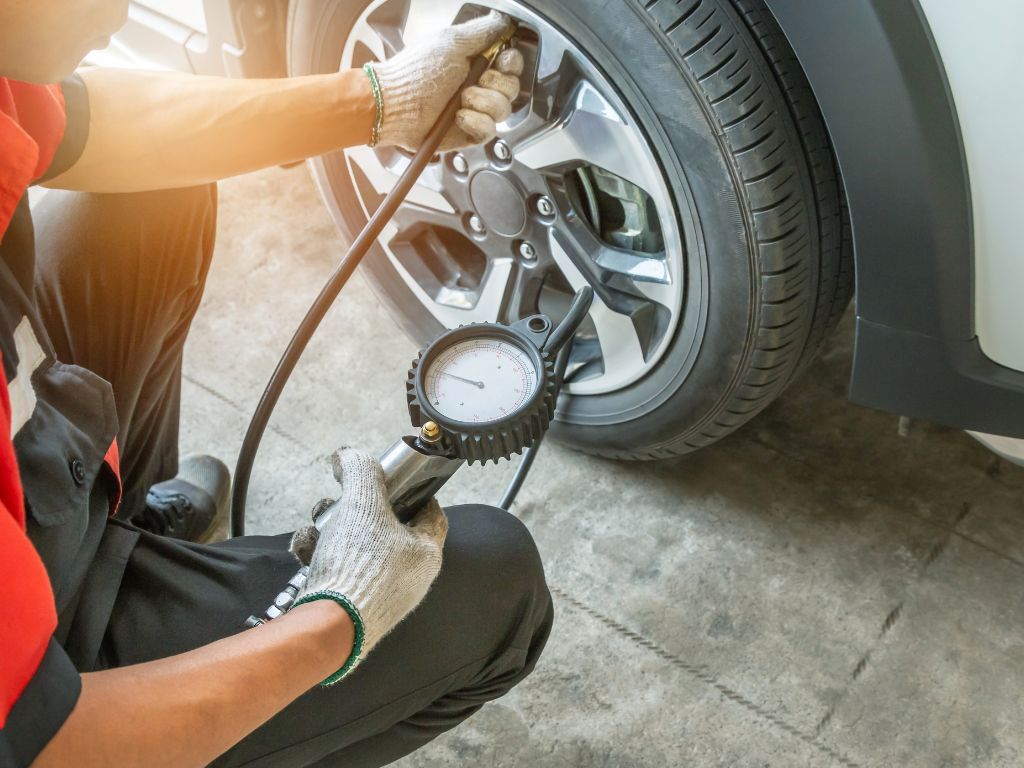

Learn how to inflate tires with a portable air compressor with these easy steps. Keep your tires properly inflated for safer driving and better fuel efficiency.
Keeping your tires properly inflated is one of the simplest ways to improve your vehicle’s performance, fuel efficiency, and safety. Under-inflated tires wear out faster, reduce gas mileage, and can even create hazardous driving conditions. Learning how to inflate tires with a portable air compressor gives you the convenience of handling this essential maintenance task anywhere, anytime. Here’s a straightforward guide to get you started.
1. Gather Your Supplies
Before you begin, make sure you have everything you need: a portable air compressor and a tire pressure gauge. Many modern compressors come with built-in gauges, but having a separate one ensures accuracy. Check your vehicle’s manual or the sticker inside the driver’s door for the recommended tire pressure.
2. Find the Tire Valve Stem
Locate the valve stem on your tire—it’s a small protrusion with a cap. Unscrew the cap and keep it in a safe place so it doesn’t get lost. The valve stem is where you’ll connect the compressor hose.
3. Connect the Compressor
Attach the compressor hose firmly to the valve stem. You should hear a slight hiss as air escapes momentarily, but once the connection is secure, the seal will hold. Make sure you have a tight fit to prevent air loss during inflation.
4. Check Initial Tire Pressure
Before inflating, use your gauge to check the current pressure. This reading tells you how much air to add and helps you avoid over-inflation, which can be just as problematic as under-inflation.
5. Inflate To Recommended Pressure
Turn on the compressor and monitor the gauge as the tire fills. Stop periodically to check the pressure and avoid exceeding the recommended PSI. Most compressors allow you to set a target pressure and will shut off automatically when reached.
6. Recheck Tire Pressure
Once inflation is complete, disconnect the hose briefly and use your gauge to verify the pressure. If it’s slightly over, release a small amount of air by pressing the valve stem. If it’s under, reconnect and add more.
7. Disconnect and Secure
Remove the hose from the valve stem and immediately replace the cap to keep dirt and moisture out. Repeat the process for each tire that needs attention.
Mastering how to inflate tires with a portable air compressor is a valuable skill that saves time and keeps your vehicle running smoothly. Make it a habit to check your tire pressure monthly, and you’ll enjoy safer, more efficient drives for years to come.
Comments are closed.