

Electric vehicle (EV) related news has been somewhat bleak in the first part of 2024; you will have heard a lot about the downturn in the EV market and OEMs scaling back plans. This might make one think that EVs are beyond their hype and that they will not be the future solution, but is that really the message we should be taking away?
In this article, IDTechEx discusses the current statistics, the state of the market, and the outlook for the future.
What Is Happening With EV Sales?
From 2015 to 2023, electric car sales have exhibited strong growth year on year, even during the period of COVID-19, when the automotive market had a significant downturn. IDTechEx’s research (“Electric Vehicles: Land, Sea, and Air 2024-2044”) found that growth has averaged 50% yearly, with growth from 2022 to 2023 at 38%.
Considering 2024 so far, the IEA recently published data showing a 20% decrease in EV sales in the first quarter (Q1) of 2024 compared to the final quarter (Q4) of 2023. This, at first, may seem alarming, but one should consider the trends throughout the year.
Despite the strong year-on-year growth, sales in Q1 consistently remained significantly lower than in Q4. However, Q1 sales have continued to increase year-on-year, with Q1 sales in 2024 being 30% higher than Q1 sales in 2023. Also, electric car sales were up in all regions compared to the same period last year.
EV sales continue to grow rapidly, but these growth rates have slowed somewhat. IDTechEx found that the yearly growth peaked between 2020 and 2021 at 111% and has decreased since. However, this is an inevitability, it is not possible to have exponential growth forever; the sales of EVs are growing into an existing (and limited) automotive market.
Where Are the Concerns Coming From?
Given that EV sales are still growing strongly, why do we see so many news stories about the downturn? Some are certainly playing to the ‘anti-hype’ in that it makes a more enticing headline to promote failure rather than to say, ‘EVs do well again’.
Some of the scalebacks in production for vehicles and components may also be due to overinvestment and the growth rate being slower than initially predicted. This, combined with the need for automakers to try and make their current EV platforms more profitable.
However, there are more legitimate concerns about the further adoption of EVs. One major limitation is the lack of models in more affordable price brackets. While there are excellent EVs on the market that now match or come under the average car price, the electric version is still more expensive than the combustion equivalent of the same model. There is yet to be much choice in models below the 25,000 euro (or equivalent) mark in Western markets.
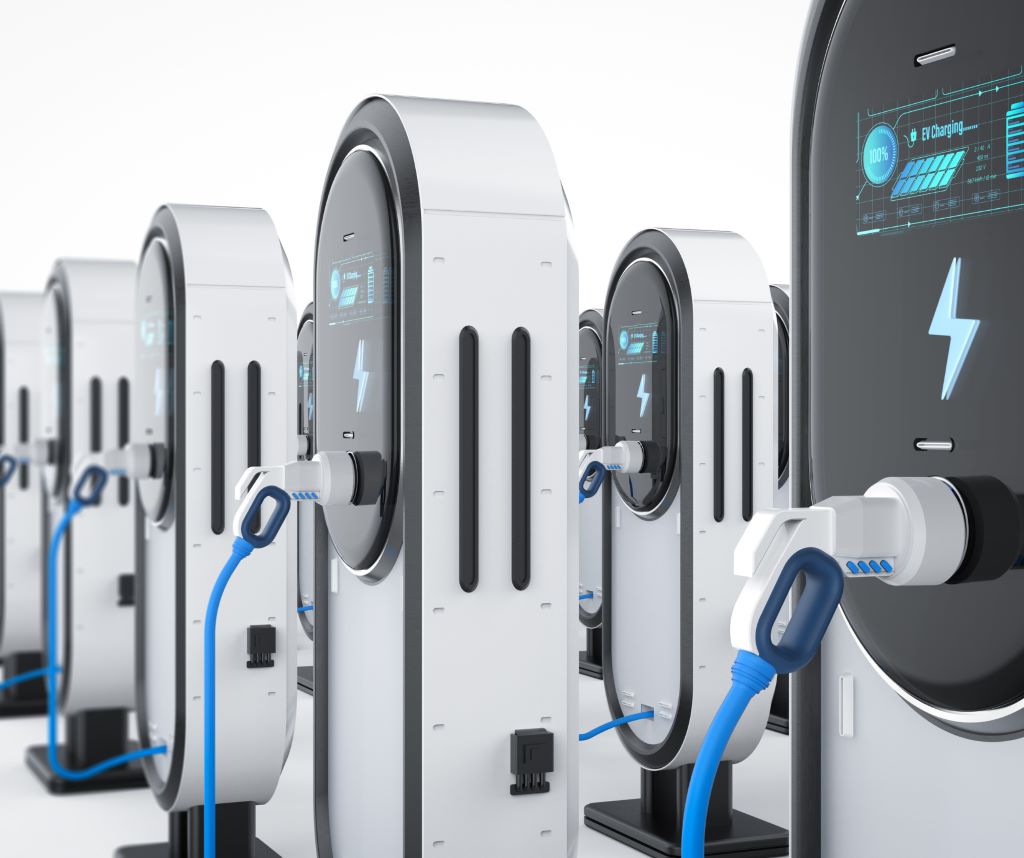
Charging infrastructure is still a key factor in consumer adoption. Most people who own EVs will charge at home overnight and occasionally utilize public infrastructure for longer journeys. However, many will see closed public chargers on their general travels, which is certainly off-putting, even if this situation is improving and public charging is not the primary mechanism.
A significant hurdle is for those who do not have access to a driveway or garage to charge. Innovations are happening here, with chargers installed in lamp posts and parking garages. However, at the moment, this still leaves consumers at the mercy of housing providers, authorities, and charging network providers to install and maintain these systems. These owners are also more likely to require vehicles in the lower price brackets, which we have yet to see.
What Does the Future Look Like?
Despite the above concerns, EV sales continue to grow, and impending combustion engine bans are unlikely to be pushed further back. Demand is still present, but lower upfront cost models must be available to fully address the automotive market’s potential.
While there are concerns around charging infrastructure, these can all be addressed through various means but will take time and investment. In the long run, EVs will lead to a cleaner road network. IDTechEx’s report, “Electric Vehicles: Land, Sea, and Air 2024-2044”, predicts that electric car sales will exceed 50 million by 2035 globally, from over 18 million in 2024.
It is not just cars, with segments like buses, trucks, 2-wheelers, aircraft, and marine all looking to electrify with their own drivers, challenges, and stages of adoption. For the next 20 years, forecasts across these categories are provided as part of IDTechEx’s “Electric Vehicles: Land, Sea, and Air 2024-2044” report.
Comments are closed.