
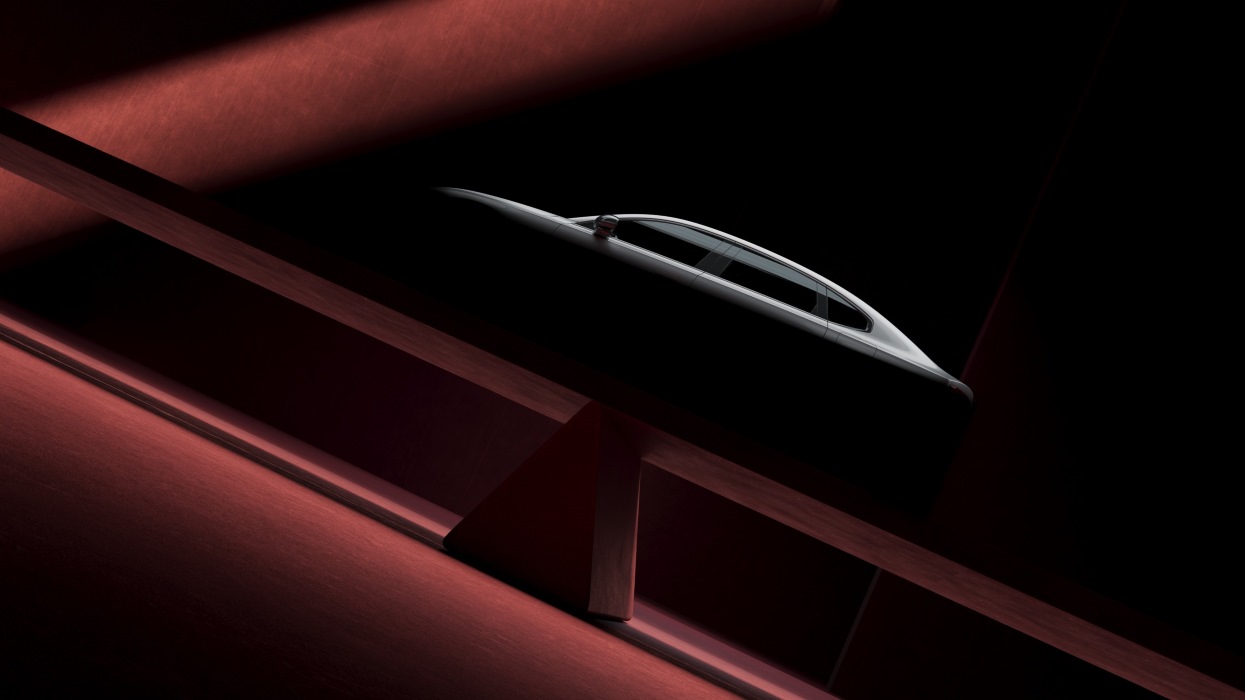
All Future Electric Volvo Cars Will Originate From One Single Technology Stack

Volvo Cars has revealed its new, game-changing technological approach on Volvo Cars’ Capital Markets Day, held recently in Gothenburg, Sweden. This new approach will define the company’s future by channelling all its engineering efforts into one direction: making cars that improve with time.
Starting with the EX90, our future electric cars will be based on the same fundamental core of systems, modules, software and hardware called the Volvo Cars Superset tech stack. The company will use a single tech and software base containing all modules and functionalities in its future product line-up.
Like a set of building blocks, the Superset tech stack can be configured in many ways. Each of the company’s new cars will be a selection, or a subset, of building blocks from the tech stack, which Volvo Cars will continuously improve and grow.
This approach ensures Volvo cars improve with time, as all the company’s engineering work will focus on improving and enhancing one tech stack. It means that the company’s work on the EX90 will directly benefit the ES90 and that the job done for the ES90 will carry on—both into the development of the EX60 coming after it and improving the EX90 already in the hands of its customers.
Closed-Loop Development
The Superset tech stack approach, which enables Volvo Cars to deliver one brand in many different product flavours, symbolizes the company’s overarching idea of how to make cars.
Volvo Cars now develops closed-loop systems based on data, connectivity, software, and core computing. This shift to core computing is at least as significant as electrification. It impacts anything connected to the cars’ electrical system, and the potential benefits are limitless.
By creating a closed-loop development process, the company can endlessly and relentlessly improve every aspect of its cars, thanks to real-time insight and advanced computing capabilities inside cars and by Volvo Cars’ engineers in its development centres.
Next-Generation SPA3 Platform
One of the company’s key building blocks is the electric technology base, a combination of the latest propulsion, electric, and electronic systems on which the car is built.
To position itself as a leader in next-generation mobility, Volvo Cars is developing a new electric technology base called SPA3, which the Volvo Cars Superset tech stack will underpin. The first car to be built on SPA3 will be the all-electric EX60 midsize SUV.
SPA3 builds on many of the building blocks of SPA2 and introduces several key upgrades. It will, for example, have an enhanced core computing capability, allowing Volvo Cars to secure higher performance and improve features through its tech stack. However, the most crucial change is that the SPA3 architecture has been built to be far more scalable than its predecessor.
This means that, if Volvo Cars wanted, it could continuously develop and build cars of all sizes – more significant than the EX90 and smaller than the EX30 – using the same technology base. The modularity and upgradeability of SPA3 will allow for lower investment costs – with lower variance as well – about sales, which in turn should lead to a more robust future cash flow.
Lower Production Costs
By having a scalable SPA3 architecture, the company creates increased synergies. It improves technology efficiency in core computing, batteries, e-motors, mega casting, and modular manufacturing, all of which contribute to driving down car production costs.
Volvo Cars’ Torslanda plant and its preparation for producing SPA3 cars showcase the company’s approach to future manufacturing. All capabilities needed to produce a car are located in the same area.
This approach becomes especially powerful when the company can use the same critical components across all vehicles built on SPA3, meaning that complexity decreases and flexibility increases.
Comments are closed.