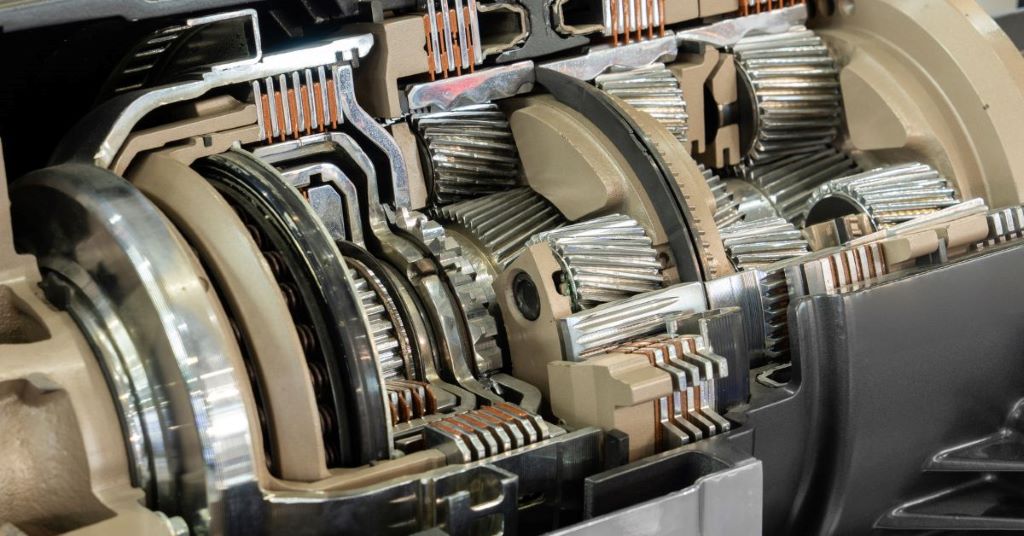

Driving a dual clutch transmission car requires more thought and nuance than a typical vehicle. Our guide explains what drivers need to know about DCTs here.
One of the latest clutch innovations in the automotive world recently is the dual clutch transmission (DCT). Unlike traditional automatic transmissions, DCTs offer a blend of manual transmission control with automatic transmission convenience. If you’ve recently gotten a car with a dual clutch transmission or are considering getting one, we explain what drivers should know about driving and owning a car with one below.
What Is a DCT and How Does it Work?
A dual clutch transmission is a variation of an automatic transmission that employs two clutches for odd and even gear sets. The design and function of a DCT allow for faster gear shifts, which can enhance the driving experience by making it smoother and more efficient.
The key advantage of a DCT is that it eliminates the need for a torque converter, a common component in traditional automatics, which often contributes to power loss during gear shifts. Instead, the DCT’s dual-clutch setup preselects the next gear, resulting in a near-instantaneous shift.
The Benefits of a DCT
The primary benefits of driving a DCT-equipped vehicle include improved fuel efficiency, faster gear changes, and a more engaging driving experience. DCTs allow for seamless acceleration without the power lag associated with traditional automatic transmissions. This makes them ideal for drivers who enjoy the nuances of performance driving but also appreciate the convenience of an automatic in stop-and-go traffic.
Cars That Employ DCTs
Numerous performance and luxury brands have adopted DCTs due to their efficiency and speed. You’ll find DCTs in a range of vehicles, from the Volkswagen Golf GTI, a favorite among hot hatch fans, to high-performance cars like the Porsche 911 and the Ford Mustang Shelby GT500. Manufacturers like Audi, BMW, and Mercedes-Benz also offer models equipped with sophisticated DCTs.
Driving Tips for DCTs
To get the most out of your dual clutch transmission car and to extend its longevity and performance, there are a few driving tips new owners should know.
Minimize Inching Forward
In situations like heavy traffic or drive-throughs, avoid inching forward repeatedly. DCTs can generate heat when clutch engagement is frequent but not fully locked, as in slow-moving traffic. If possible, leave enough space ahead of you to move forward less frequently but over longer distances.
Don’t Overuse Manual Mode
Another thing you shouldn’t do with a dual clutch transmission is use the optional manual mode too often. While it’s tempting to constantly flick through gears using paddle shifters or the gear lever in manual mode, doing so can cause unnecessary wear on the transmission over time. Use manual mode sparingly, and when you do, make sure to shift gears within the recommended rpm ranges.
Understand the Launch Control Feature
Many performance vehicles with DCTs come with a launch control feature designed for maximum acceleration from a standstill. While thrilling, repeated use of this feature can put significant stress on the transmission and drivetrain components. It’s a fantastic feature for occasional use but should not be a regular part of your driving routine.
We hope our guide has helped you better understand the ins and outs of DCT cars and how to handle them best. If you’re in the market for a new car and want something more advanced than a standard automatic or manual, a high-performance DCT-equipped vehicle may be just for you!
Comments are closed.