
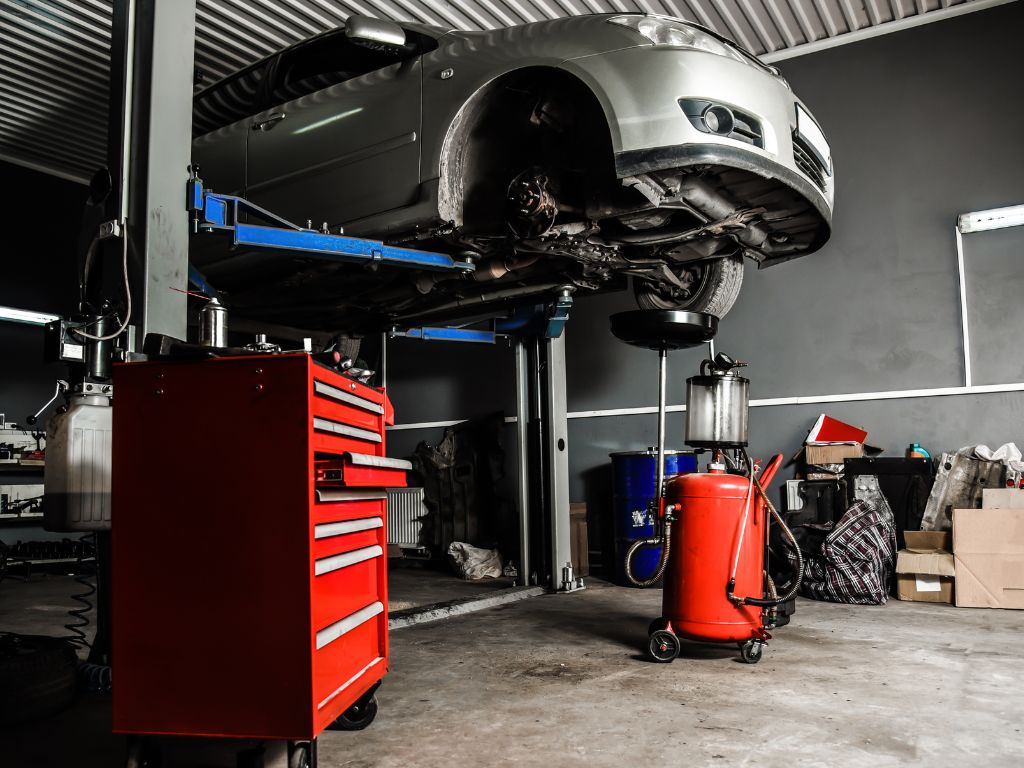

Get essential tips for working on your vehicle at home. This guide details the proper procedures and tools needed to safely lift your car for repairs.
Working on your own vehicle is both practical and gratifying, but prioritizing safety is necessary for every step. Learning how to safely lift your car for repairs is one of the most important skills for any car owner or enthusiast. Proper lifting techniques protect you and your vehicle, and create smooth, efficient work without costly or dangerous mistakes.
Use a flat, stable, and uncluttered surface, preferably concrete, for safe lifting. Never attempt to lift your vehicle on an incline, loose gravel, or soft surfaces, like grass or asphalt, which can cause instability.
An organized workspace minimizes distractions and reduces the chance of accidents. Chock the wheels that remain on the ground with sturdy blocks to prevent unintended movement and always engage the parking brake.
Choose the Right Lifting Equipment
For most home garages, a hydraulic floor jack and heavy-duty jack stands are typical. Use a jack rated above the vehicle’s gross weight, and use jack stands to support the car once lifted.
Avoid using “emergency” scissor jacks for repairs, since these are only for quick tire changes and not extended work. If working on heavier vehicles, or on tasks that require more space underneath, consider investing in a vehicle lift for your garage. When doing your research, just make sure you understand vehicle lift weight capacity specifications, so you don’t ever overload a lift, which can lead to dangerous equipment failure and severe injury.
Follow the Correct Lifting Procedure
Every vehicle has specific jack points, typically reinforced areas of the chassis, that safely bear its weight. Consult your owner’s manual or online resources for diagrams showing where to position your jack, since incorrect use can bend or damage the frame and may even cause the car to slip from the lift.
Raise the car slowly, paying attention to any unexpected noises or movement. As soon as you reach the desired height, place the jack stands at the correct support points and lower the car gently until it rests securely on them. Never crawl under a vehicle supported only by a jack.
Double-Check and Reinforce for Safety
Once your vehicle is up, don’t rely on a single check. Carefully push the corners of the car and observe for any wobble or shifting. The vehicle should remain completely stationary. If anything seems unstable, lower the car and reassess your setup.
For added security, some mechanics place the removed wheels under the car chassis (away from your work area) as a backup safety measure. Always keep emergency contact information nearby and let someone know you’re working under a car, just in case.
Essential Safety Habits for Every Project
Mastering how to safely lift your car for repairs is a good lesson to learn. Adopting a safety-first mindset protects you, your car, and everyone around you, making every repair a success from start to finish.
Comments are closed.